





I’ve tried not to copy edit Striking the Sun for this second edition. It’s difficult though, because I do have issues with this section of the novel. The challenge is, of course, that it’s doing so much that it’s tricky to trim or reorganize. (Internally, I referred to this as the ‘Diarrhea Knot.’ If I could do it all again, I’d find a way to merge with the Veiligstijl Glas era of Part Two, and introduce Wes Speksnjider sooner.)
Now seeing the boys’ first pro cycling team, LaxRelief (which becomes StoolAid), we’re moving rapidly through their formative years. The broad strokes of Liam & Dominic in Part One is building their friendship, building their careers, growing Liam beyond his environment, then splitting them apart.
Chapter Six introduces several new characters, some of whom are important. Because anybody reading this is likely engaging with the novel critically or looking for more information, I’ll spare the spoiler warnings:
- Ton Verstraaten – Actually a DerailedUK character before he was a Striking the Sun character. (Long-term readers may remember him as a fictional hapless coach for the Lotto team providing useless training advice to our readers.) He is the only sincere member of Nick Lyon’s entourage, and the only with expertise. He rejoins the story in Part Three, brought to Liam’s superteam – an indicator that Liam either holds nostalgia for this part of his life, or else that even with his attitude he’s sufficiently detached to recognize Ton’s valuable qualities as a DS.
- Stephen Mcloughlin – Son of Scouse cycling semi-royalty. He’s an archetype you might recognize if you’re cycling-adjacent. Although he leaves the sport, he moves into PR and then to a small newspaper. Because people miss this detail, I’ll spill it: the newspaper is the Globe, and he is the Steve who is trying to be friends with Susan in the present day.
- John Clarke – Another Scouser, rough and brash. He becomes a yardstick for Dominic’s own distance from his roots later in the novel. Eventually he becomes a plumber and sells Susan clenbuterol online.
- Nick Lyon – A brief appearance in this section of the novel, but I do enjoy this caricature. Vain, willing to spend his money but only on himself to make himself appear rich, penny pinching, and always looking for a way to skim money. He’s not actually really based off any team owners I knew, though there was somebody else who sprang to mind when I re-read it.
A Mediated Cycling Personality
Henri Giroud has been present in the book so far, in articles, television commentary, letters to the editor, and now in a viral clip that’s escaped the cycling-only containment and broadened to the rest of the internet.
Every one of these appearances is mediated. It is page 98 when we get our first unmediated glimpse of Giroud, and then we slowly taper from the mediated representation to the real man, through scenes of him arriving to commentate and interacting with producers, and so on.
This distinct trajectory is vital to the novel’s structure. In Chapter 6, Giroud is defined perhaps even by his failed mediation. He is seen through a digital zoom on a camera phone; he is a “blank” being ignored by riders and journalists. The media (TV4, the internet) has already written his narrative: he is the pathetic, desperate, “forever alone” man.
Yet as his appearances become less and less mediated, he appears more competent, more charismatic, and even more capable. The moments where Giroud is unmediated—sitting in a smoking room, fighting broadcasters physically, or planning his farm sanctuary—are where he regains his charisma. When he is outside the lens of the spectacle, he stops being a punchline and starts being a mentor.
By the end, you should see clearly that the mediated Giroud is a ghost of a past the industry has already discarded, the unmediated Giroud is a man building a future.
His arc essentially appears to the inverse of Dominic’s at first glance, but serves to shows us the reality Dominic is surging towards. Dominic starts with the illusion of success and is gradually crushed by the reality of the sport. We do not need to dwell, but there is eventually a hopeful ending here.
1. Meme vs. Machine
The pairing of the Forever Alone Bike Race Man YouTube clip with the start of the LaxRelief contract is a critique of how the media devalues expertise and humanity.
In the YouTube clip, Henri Giroud is reduced to a “sad, melting mass of yellow color” for the amusement of a digital crowd that doesn’t know (or care) who he is. The comments section mirrors the same vacuous, aggressive noise Susan encounters at the film screening. The internet here acts as a flattening machine; it takes a man who has dedicated his life to the sport and turns him into content for hostile audiences.
This pairs with Nick Lyon’s introduction of LaxRelief. Just as the YouTube audience treats Giroud like an object to be mocked, Nick Lyon treats his riders like assets to be managed… or neglected. Lyon promises the world (training camps, apartments) but delivers broken team car tires and penny-pinching.
The industry is a cycle of exploitation. The riders (Dominic/Liam) are promised a “huge leap” toward their goals by management (Lyon), while the former icons (Giroud) are left to wander the sidelines, ignored by the very people who should respect them. Both threads demonstrate that in this hyperreal world, neither the athlete nor the expert is allowed to exist as a whole person; they are only allowed to exist as product.
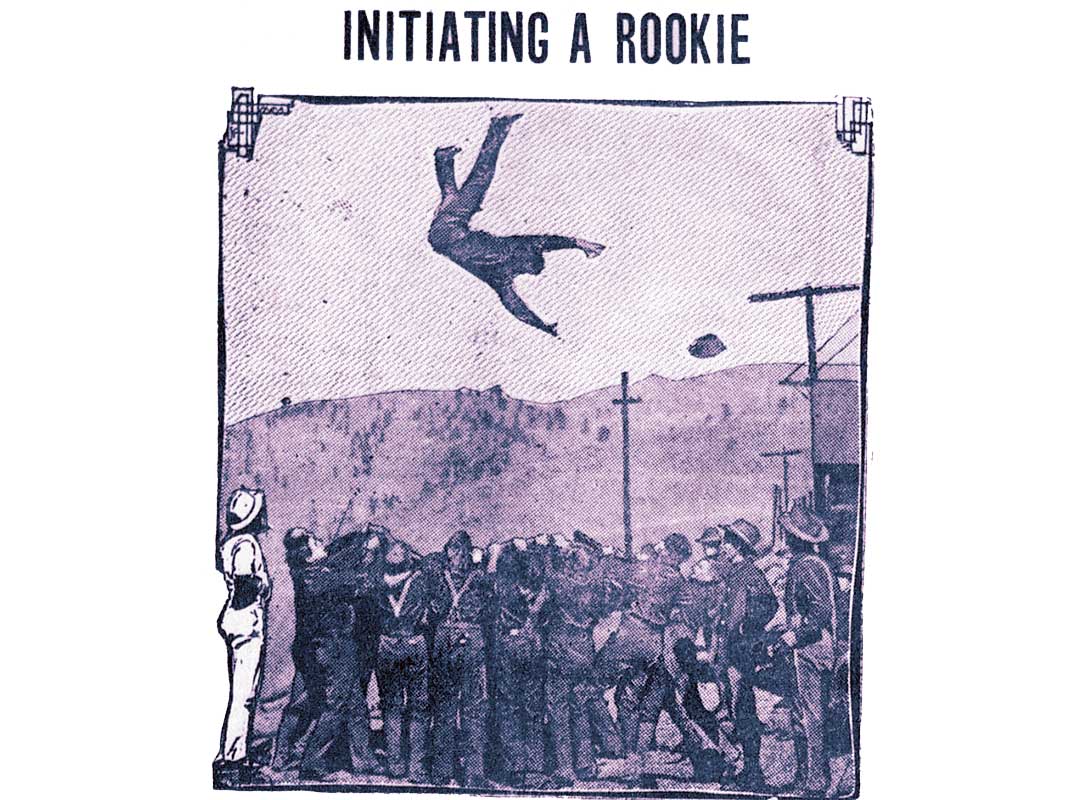
On Hazings
Chapter 7 acts as a counterweight to Chapter 6. While Chapter 6 focuses on the structural and financial illusions of both the media world and the cycling circuit (Lyon’s canceled training camp, the Globe’s frantic digital metrics), Chapter 7 pivots to the psychological and physical hazing required to survive within those systems.
When paired together, these two chapters expose the contrast between the administrative artifice of modern life and the raw, unglamorous reality of human endurance.
1. Corporate Accountability vs. DIY Management
The structural symmetry between the management styles in Susan’s and Dominic’s worlds highlights a sharp thematic irony. In Susan’s world, management is an exercise in hyper-surveillance and arbitrary structure. Nathan uses a performance review, tight schedules, and spreadsheet accountability to assert dominance under the guise of “recognizing her contribution.” It is an administrative, bloodless exercise designed to force her compliance with a project (G Magazine) that is already “descending into the usual futility.”
In Dominic’s world, the official corporate management (Nick Lyon) is completely absent, “counting the money.” Instead, the riders are left with Ton, whose primary qualification is holding an HGV truck driver’s license. Yet, Ton’s authority is far more real than Nathan’s.
Look at how both worlds handle rebellion. Nathan uses an email notification and a rigid corporate schedule to punish Susan for her tardiness. Ton, conversely, handles a past locker-room prank by quietly filling the offending riders’ inner tubes with water before a race. Ton’s punishment is visceral, physical, and mechanical, yet it ends in mutual respect and a handshake. Nathan’s punishment is designed to alienate; Ton’s is designed to integrate.
2. The Architecture of Escape
Both chapters feature agonizing moments where Susan and the cyclists must physically retreat from the crushing weight of their respective industries. In Chapter 6, when Nick Lyon cancels the training camp, the riders rebel by staging a DIY camp on the Yorkshire Moors. In Chapter 7, Susan locks herself in the windowless office bathroom, turns off the lights, and plunges herself into deep darkness.
Just as the drone of the wind on the moors isolates the cyclists, the white noise of the bathroom extractor fan becomes Susan’s sanctuary. It drowns out the “artifice clouding her daily life” and the “nonsensical chatter” of the office know-it-alls. In both cases, the characters have to actively manufacture a state of sensory deprivation just to remind themselves that the high-stress demands of their corporate handlers are ultimately irrelevant and incorrect.
3. De-Mythologizing the Spectacle: From Meme to the Mud
The final section of Chapter 7 is a graphic folk tale of the anonymous cyclist who suffers a sudden, catastrophic digestive failure mid-race. It’s a thematic pairing with the opening of Chapter 6.
Chapter 6 has an abstraction, the Forever Alone Bike Race Man YouTube clip. Here, Henri Giroud is completely abstracted by technology. He is a “melting mass of yellow color” compressed by a trial-version video editor, dissected by a vacuous online comment section, and flattened into a bloodless digital meme.
Chapter 7 has a folk tale that serves to reshape Dominic’s dreams into his depressing lived reality. The folk tale of the exploding bowels strips away televised glamour, romance, and digital abstraction from professional sports. Dominic realizes that professional cycling isn’t about the heroic podium finishes shown on TV4; it means “spending most of our time with our faces pointed directly into some other guy’s ass.”
By ending the chapter on the phrase “I have been hazed,” Dominic isn’t just talking about joining the peloton. He is realizing that the grand narrative of the elite athlete is a lie designed for public consumption. Beneath the sponsorship logos lies a brutal, deeply unglamorous world of physical degradation, where a human body is pushed so far past its limits that its own digestive system can turn on it as “retribution.”
The Synthesis
Ultimately, these two chapters chart the exact moment where the romantic illusions of youth die. Susan realizes the creative world of publishing she dreamed of as an eighteen-year-old is a corporate box managed by petty tyrants. Simultaneously, Dominic realizes that the stable, elite world of professional continental racing he signed up for is a penniless framework where you survive on menthol rub, diesel fumes, and the constant fear of the man in front of you collapsing.


