





Chapter Eight of Striking the Sun doesn’t need too much analysis — it’s treading a similar ground to the last couple of chapters. Striking the Sun is a novel about mediation, mostly, and this chapter focuses on the banality of the machine. There’s no coordinated corporate conspiracy, just a system driven by petty egos, incompetence, and the thoughtless demands of capital.
Temporalities and Pacing
We’re relatively early in the novel still (it’s 50 chapters long, so we’re about a sixth of the way in), but the timelines should be clear now. Chapter One begins in June 2011 for Dominic (and a little earlier in 2011 for Susan), close to the end of the novel. While Susan’s story remains in 2011, traversing the same January to July timeline as Dominic’s story in Part Three, we travel back for an extended flashback in Dominic’s story from the second chapter, which takes us from discovering cycling and meeting Liam as a child and continuing until we return to the present day.
This is creates a temporal mismatch, of course, but more than that, it’s a pacing mismatch:
Susan’s story serves to ground the novel in the present. Her narrative unfolds over a constrained timeline, moving slowly from early spring into summer. This day-by-day pacing anchors the reader in the immediate reality of the novel’s universe. Because her timeline is so compressed, every petty office dispute and missed deadline feels weighty and inescapable.
Dominic’s story, by its nature, has to move faster. Because his narrative is bridging a gap of several years to eventually catch up to the present of Chapter 1, his timeline accelerates. We see seasons blur together (“Autumn rolled into Yorkshire, followed by winter”), and major milestones (like Liam’s win) are summarized rather than experienced in real-time.
The effect should be that Dominic is speeding through his youth to inevitably crash into the slow, grueling, present-day reality that Susan already inhabits. And Dominic’s story does slow as the novel proceeds. This first part takes us several years from childhood to his first two years as a pro cyclist. Part Two (chapters 15 to 27) spans two years, 2009 and 2010, and Part Three spends the second half of the book covering approximately six months. Although the timeline slows, I find the pace of Dominic’s story remains consistent, making Part Three a blistering read. (This is my way of saying: stick with it.)
1. Susan’s Self-Sabotage is the Ghost of Dominic’s Future
Although the threads again overlap thematically, which I’ll discuss later, an important part is that Susan is further along her journey of disillusionment. This chapter makes her arc poignant to both threads — particularly her self-sabotage in the face of what should be an easier path for her.
Nathan and Jonah give her a defined checklist to work through. It is insulting, but it is easy. Yet, she cannot bring herself to just check the boxes. Her resistance isn’t Liam’s upcoming rebellion (spoiler warning, sorry), but instead a slow paralysis. She is losing her words. Her brain feels like a lame limb.
She recognizes that the system has stripped her of her ambition, but her attempts to fix it—buying a bagged salad and a discounted Mozart CD from a corner shop—are inadequate against the weight of her depression. She represents an end-state of the corporate machine: a person who knows she is trapped but lacks the energy to open the door.
The Banality of Capital and Incompetence
Both halves of this chapter illustrate the point that there is no grand mastermind pulling the strings in media or sports. It is a collection of fragile egos trying to survive the demands of capital.
The Globe is failing because it’s a billionaire’s neglected vanity project. Joshua Collins doesn’t care about journalism; Jonah is fighting to keep his middle-management job; Nathan is exercising petty dominance. The launch of G Magazine isn’t a bold new direction, it’s a panicked reaction to a rich man’s passing whim.
Dominic experiences a similar incompetence with Nick Lyon. Lyon isn’t an evil mastermind; he’s a cheap, disorganized fraud who commits a financial scandal, loses the LaxRelief sponsorship, and has to furiously backpedal to secure “Stool Aid” as a sponsor.
1. The Humiliation of Branding
The transition from LaxRelief to Stool Aid is dark comedy, of course. But there is truth in the satire.
It wasn’t enough that they were riding for a diarrhea medicine company before, they are downgraded to an even blunter brand name. Going from “Relief” to “Stool” tracks the loss of glamour in Dominic’s dream.
Nick Lyon delivering the news with “Congratulations” highlights the absurdity of their commodification. The riders are moving billboards for excrement, and they are expected to be grateful for it because it keeps the illusion of the pro dream alive.
2. Dominic’s Jading and the Airport Punchline
Dominic realizes that he isn’t going to effortlessly lay waste to the British cycling scene. Then he watches Liam take the glory and disappear off the radar in the off-season, highlighting what appears to be the transient, transactional nature of their friendship. And finally he gets blindsided by a journalist about his own salary, exposing the lack of protection and transparency in his chosen profession.
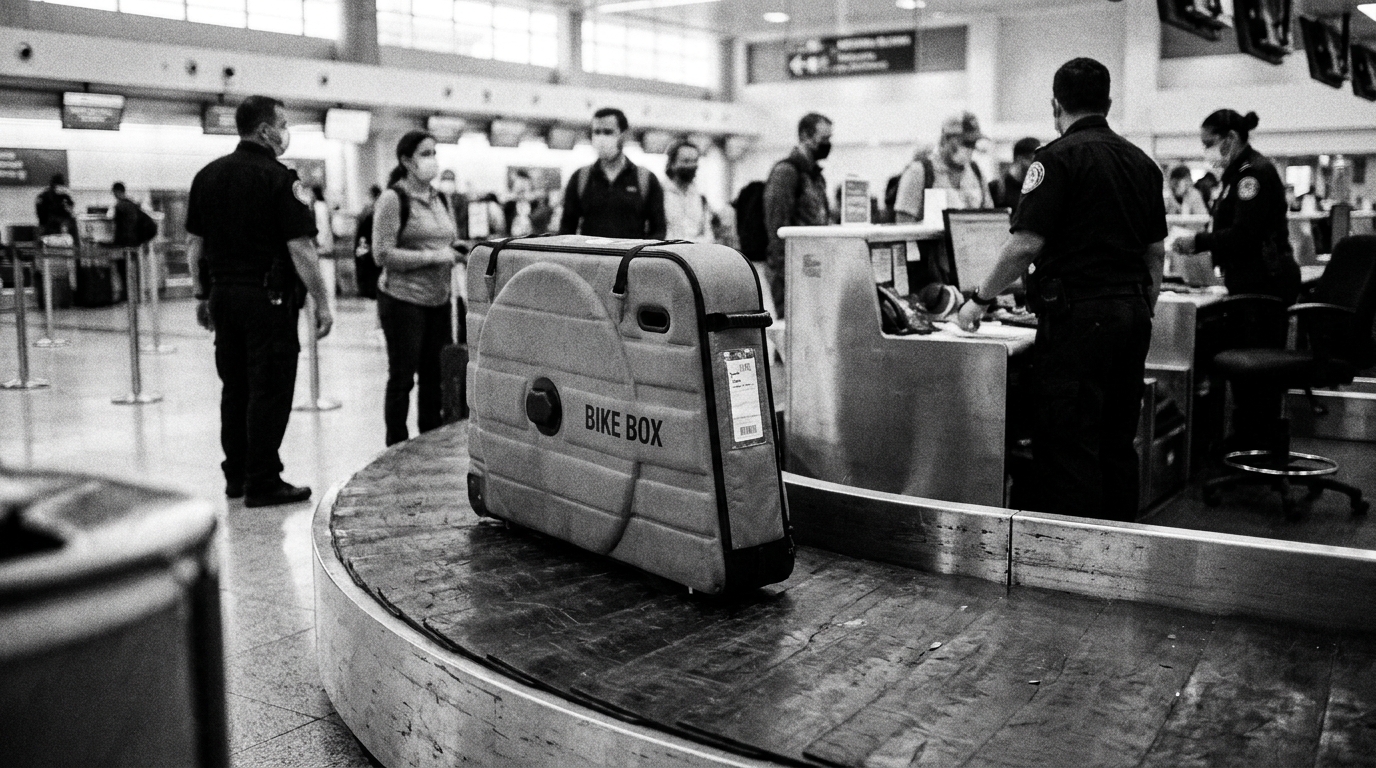
The chapter ends on a pathetic note. Nick Lyon promises him the glamour of Provence to make up for the missing wages, but when Dominic arrives at the airport, he has to pay his own baggage fee. This is the distillation of the professional cycling dream for young riders: you get the title, but you end up paying your own way.
Refusing to Acknowledge One’s Conditions, Rather Than Refusing to Accept Them
The call from Cycle Extra also provides a structural irony. Dominic rejects speaking with the media because engaging with the truth of his exploitation threatens his fragile fantasy. But the reader knows that Susan—our other protagonist—is on the other side of the same industry. Dominic refuses to speak to the media to protect his dream, while Susan is part of the media and realizing her dream is already dead.
1. Self-Punishment as Coping Mechanism
Dominic’s immediate reaction to the journalist exposing Nick Lyon’s wage theft is not to get angry, or call his teammates, or confront his boss. What does he do?
“Then, as with all my other problems so far in life, I ignored it by riding my bicycle.“
When confronted with systemic abuse, Dominic’s instinct is to continue pursuing his dream. One should note that this was a starvation ride, which is perfectly common in cycling but remains mentioned in the text for a reason.
He chooses a starvation ride to regain a sense of control. This mirrors Susan’s coping mechanisms. When confronted with the reality of her job, she isolates herself in the bathroom or punishes herself with alcohol. They both respond to external exploitation by turning the damage inward.


