

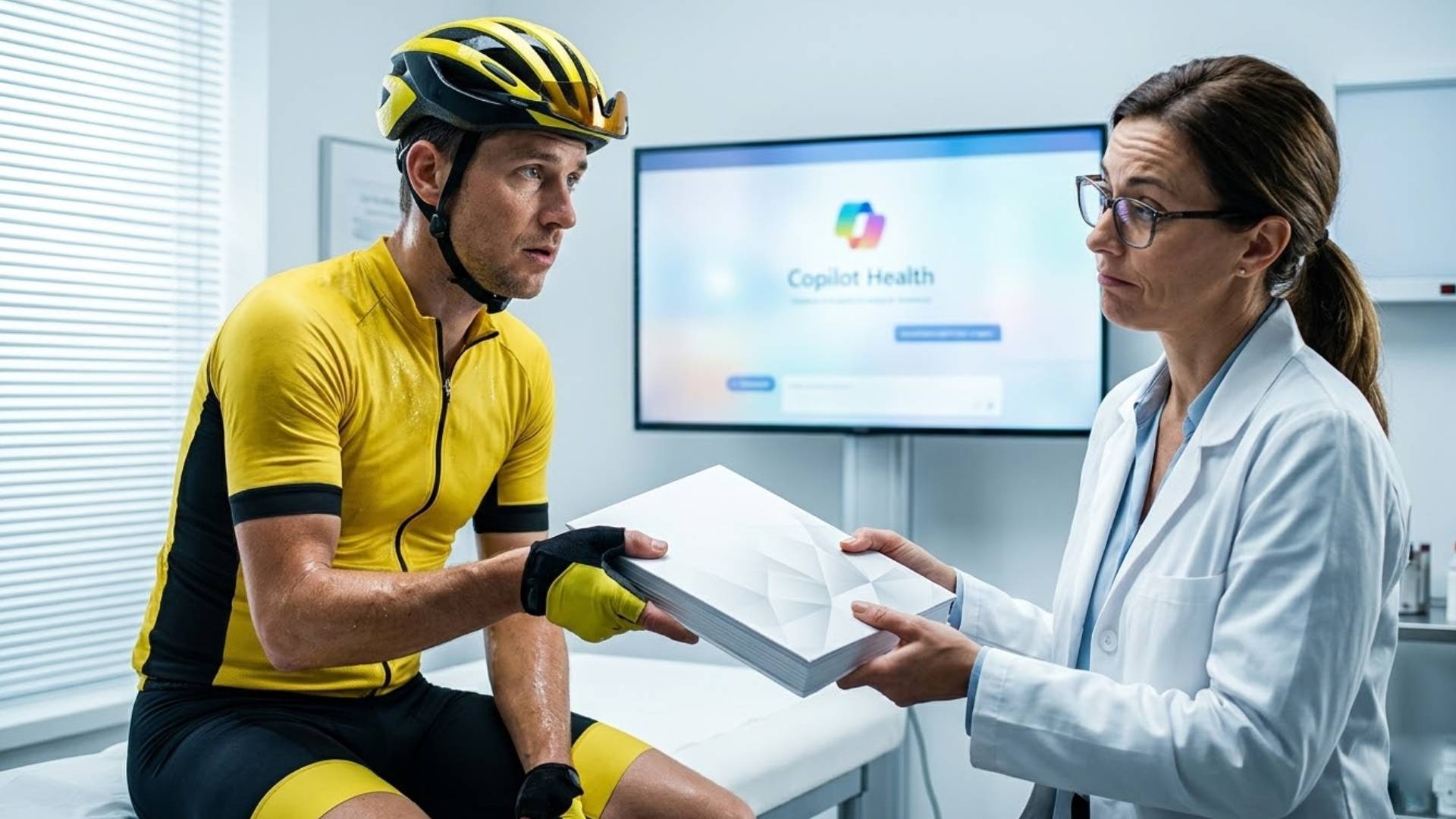

If there is one thing cyclists love, it’s biometric data. Heart rates, pedal smoothness, sleep cycles, VO2 max, bowel tension. What if an AI agent could take all this personal data and just suck it all up? Stop thinking about bowels, that’s against the AI’s safety guidelines. But the stuff it can sell to your health insurer? Gosh, it wants that.
This week, former-software-giant-turned-AI-slop-merchant Microsoft unveiled Copilot Health, an AI-powered chatbot designed to take all your wearable data (don’t give it this), cross-reference it with your actual medical records (definitely don’t give it this), and turn it into what they are calling a “coherent story.”
Do you need an algorithm to write a tragic novella about why your legs felt like concrete on the Sunday group ride? Dunno. Maybe if it has some spicy romance scenes.
Microsoft told us that Copilot Health will pull in data from over 50 devices, including Apple Watches, Oura rings, and Fitbits. It will also tap into lab results and visit summaries from over 50,000 hospitals. The stated goal is to help you “pinpoint reasons why you don’t sleep too well” and give you the right questions to ask your actual, human doctor.
It’s WebMD but capable of inflicting even more psychic damage, and snitching on you while it does so. Supposedly it’s good for endurance athletes, but we’ve already forgotten what they told us and it seems rather unlikely they’ll be reaching out to us again after this article.
Anyway, if you buy this, prepare to look like an absolute cunt handing your physician an AI-generated, perfectly formatted dossier explaining how your FTP dropped by twelve watts because your blood-oxygen levels dipped slightly during a REM cycle three weeks ago.
Naturally, Microsoft is swearing that your data will be completely safe. Copilot Health will exist in a “separate, secure space” insulated from the rest of the app, and they promise they won’t use your medical history to train their language models. Which is for the best, since we don’t need LLMs suddenly bringing up itchy anuses and micropenises when we ask them to write sick day emails on our behalf.
Microsoft also told us that the tool is not intended to “diagnose, treat or prevent diseases.” It’s just there to aggressively summarize them.
Currently, the service is opening via a waitlist in the US. Don’t join it. Microsoft eventually plans to charge a subscription fee. Don’t pay it. We promise you, this robot does not need to know about the saddle sore on your smelly bridge. Nothing good will come of sharing that information.