


In a sport increasingly dominated by carbohydrates per hour and aerodynamic sock height, Lidl-Trek has decided to stick with the oldest marginal gain in the book: basic physics.
The team have announced that they are renewing their partnership with Best Bike Split for the 2026 season. While press releases about “continued partnerships” usually go straight into the digital trash bin, this one is notable for one reason: they’ve been doing this since 2014.
Back when the rest of the peloton was still debating if aero frames were a gimmick, Trek Factory Racing (the team’s emo phase name) was already plugging GPX files into Best Bike Split’s algorithms to figure out if a skinsuit was faster than a jersey on a climb.
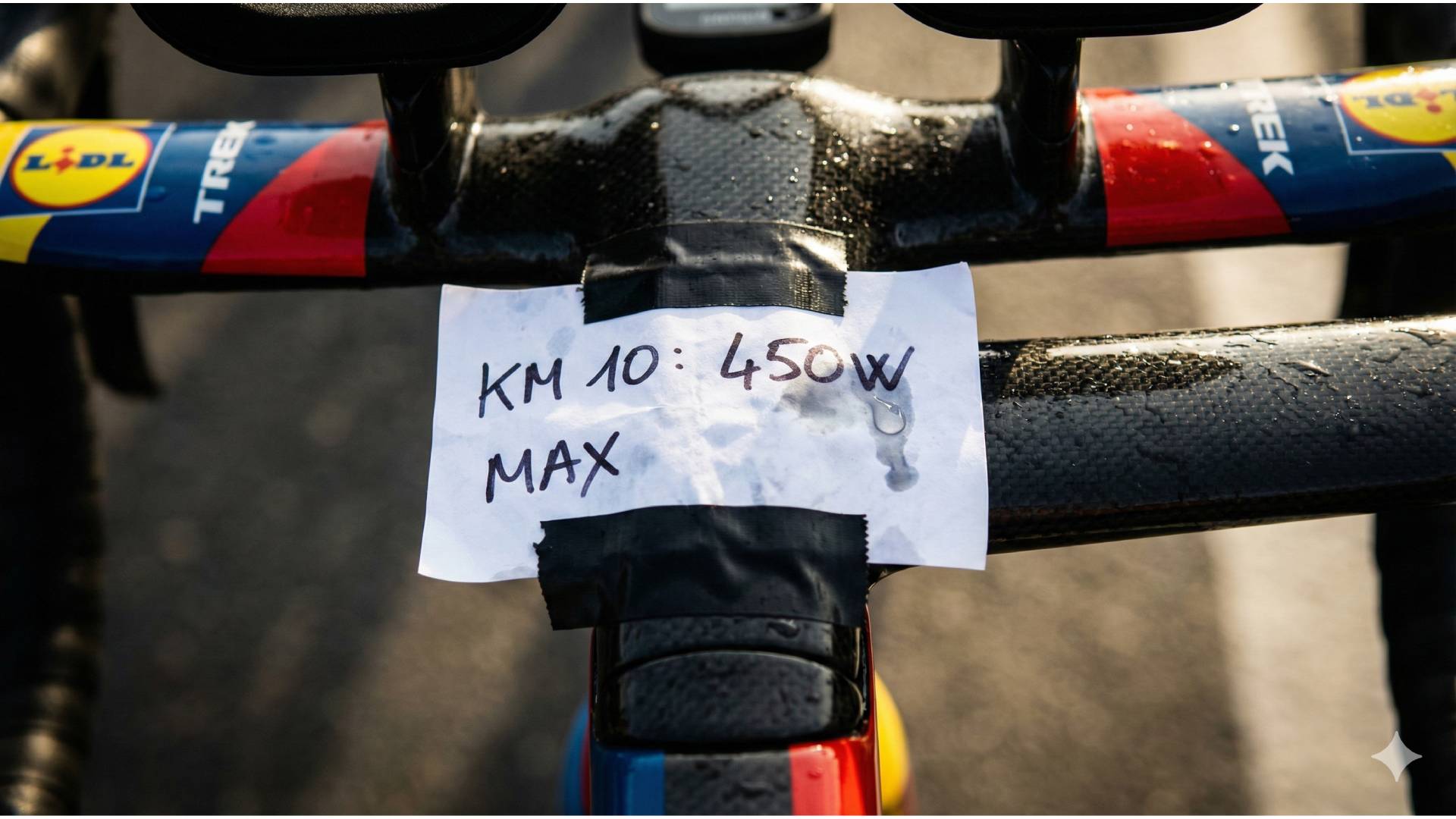
The “Cheat Sheet” on the Stem
If you’ve ever wondered how a rider like Mads Pedersen or Jonathan Milan knows exactly what wattage to hold on a rolling time trial course to avoid exploding before the final kilometer, this is the answer.
Best Bike Split (BBS) takes the course data, the rider’s aerodynamic drag (CdA), the weather, and the bike’s friction variables, and spits out a pacing plan. It tells the rider: “Push 450 watts here, coast here, and tuck here”.
According to Koen De Kort, Lidl-Trek’s Team Support Manager (and former road captain), the software translates “complex data into clear, race-ready plans,” including those little laminated “cheat sheets” you see taped to top tubes during time trials.
Why It Matters for 2026
Lidl-Trek is coming off a massive 2025 season with 46 victories and a 3rd place ranking in the UCI WorldTour. Team Time Trials are the ultimate test of this specific tech. It’s a math problem on wheels: how fast can we go without dropping the fourth rider? The fact that they are winning these events suggests the algorithm is working.
Rich Harpel, the President of Best Bike Split, noted that Trek was “the first team to see the value of BBS way back in 2014”. Twelve years later, in an era where teams are using AI to design nutrition plans, sticking with the software that treats a bike race like a physics equation seems to be a solid strategy.
Now, if only the software could pedal the bike for you.