


With concerns about the summer temperature in North America (and desire to introduce mid-half ad breaks) during the 2026 FIFA World Cup, football players and fans are currently experiencing mandated hydration breaks mid-match. The clock stops, the coolers open, and athletes get a brief respite to lower their heart rates and sip electrolytes.
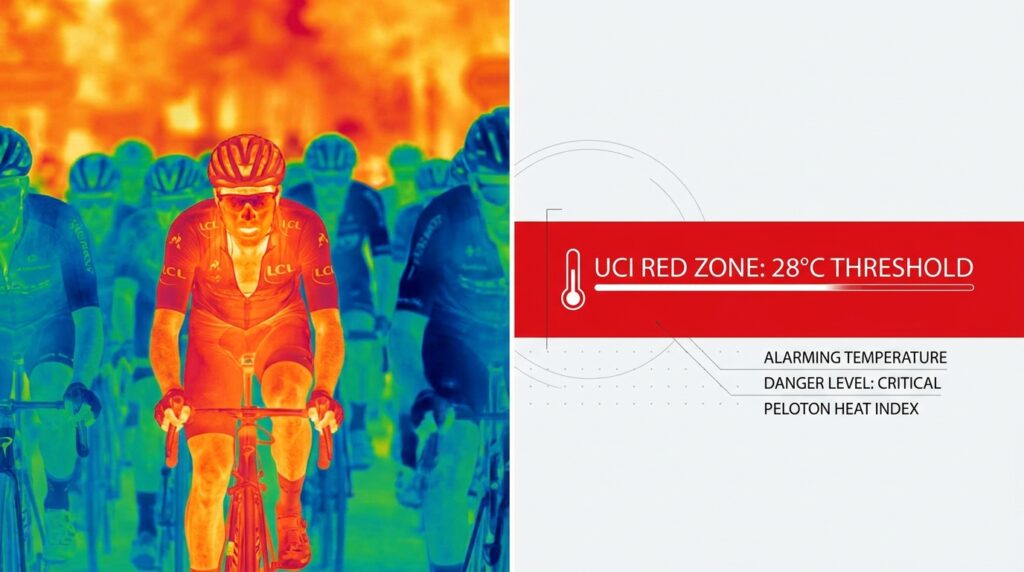
Contrast that with the scene at the Tour de France, where the European heatwave just triggered the UCI Extreme Weather Protocol and forced organizers to reduce the distance of today’s mountain stage through Corrèze. Out on the asphalt, there are no timeouts. With the Wet Bulb Globe Temperature index (combining humidity, wind, and solar radiation rather than basic air temperature) soaring past the 28°C “Red Zone” threshold, stakeholders met in a panic to chop the route down before the riders melted into the asphalt.
Elite cyclists are expected to push threshold power numbers in air temperatures north of 35°C while navigating melting tarmac and high-speed descents. It raises a glaring question that standard cycling media outlets keep dancing around: with the climate shifting and race routes getting more extreme, does professional cycling need to borrow a page from football and introduce official hydration breaks?
It is a premise that sounds reasonable to anyone who has never tried to pilot a carbon bike through a chaotic peloton at 50 km/h, but the reality is simple. Official, synchronized timeouts where the entire race neutralizes for a quick drink are highly unlikely to ever happen in professional cycling. The sport’s entire operational logic rejects the concept.
The Operational Impossibility of a Peloton Time-Out
While the mainstream sports pages love the concept of an organized pit stop, the operational reality of the WorldTour makes a synchronized race halt impossible. Cycling is a sport of pure, continuous physical attrition. If you neutralize the race mid-stage to let everyone have a drink, you disrupt hard-earned breakaways and team strategies, and hand dropped riders a lifeline to recover and pace back into contention. While we do see this on occasion, such as when trains disrupt races at level crossings, mandatory regular breaks transform the nature of the sport.
Then there are the safety concerns. Compacting 150+ exhausted professional riders into a slow-moving or stationary neutral zone on a narrow French D-road is a recipe for disaster. The risk of touching wheels, stacking the field, and causing a massive pileup is significantly higher when a tight bunch tries to stall than when it keeps rolling.
But the bigger issue with the idea of hydration breaks is that, unlike football players on a pitch, cyclists possess continuous access to fluids while moving. They don’t need a timeout because they can consume fluids and carbohydrates constantly while moving at 50 km/h. Stopping the clock does not fix the dehydration problem, it only upsets the athletic integrity of the event.
How the WorldTour Handles Extreme Heat Instead
Instead of formal breaks, the sport relies on the UCI Extreme Weather Protocol to modify racing parameters before the start gun fires. As with today, when the Wet Bulb Globe Temperature index climbs past the 28°C “Red Zone” threshold, race officials, teams, and rider representatives meet to adjust the stage profile.
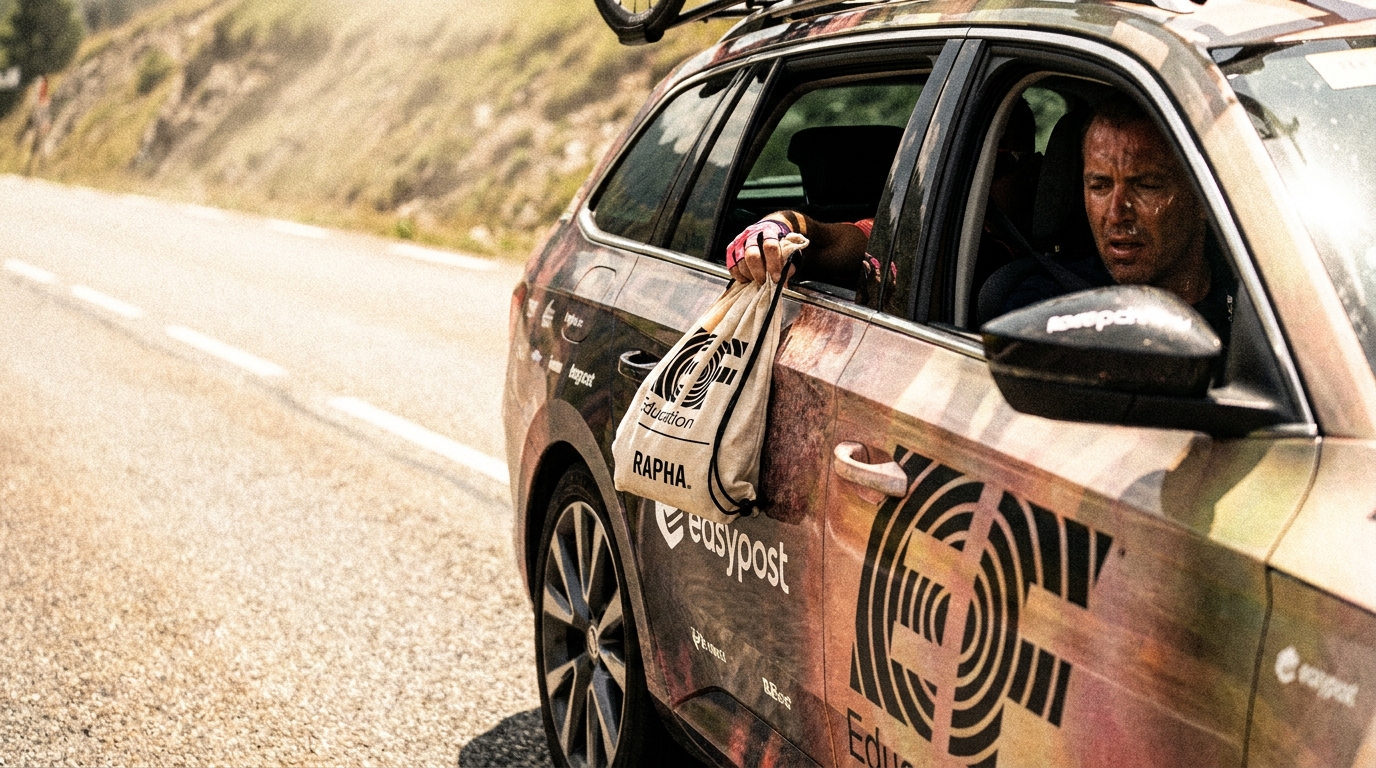
When the heat reaches these margins, the UCI skips the time-outs and simply opens up the feeding window. Under normal conditions, feeding from team cars is strictly banned in the first 30 kilometers and the final 20 kilometers of a stage to prevent a logjam of team vehicles. For this heatwave, officials waived this restriction, allowing continuous car handoffs from 10 kilometers after the start until 10 kilometers before the finish line.
Organizers have also altered the rules surrounding static feed zones. Riders are typically only allowed to grab loose bottles on climbs to minimize clutter. The revised protocol now allows team staff standing in the designated green zones to pass up full “musette” feed bags packed with ice packs and specialized nutrition, maximizing fluid delivery in a single pass.
The Granular Science of Bio-Hacking a Heatwave
Behind the scenes, WorldTour teams have turned heat management into an internal science, burning through roughly 450 kilograms of ice per squad every single day. The core focus is creating a internal “thermal buffer” before the riders even roll off the start line.
During pre-race warm-ups, riders are wrapped in ice vests and instructed to submerge their hands and forearms in ice water, cooling the blood before it recirculates back to the organs (this is a natural thermoregulation tactic utilized by mammals – you can watch kangaroos do this during your regular trip to the outback). Riders are also consuming semi-frozen electrolyte slushies, lowering stomach temperatures from the inside out.
Once out on the road, survival tactics turn beautifully rudimentary. In addition to their regular duties of collecting 10 water bottles at a time from team cars and distributing them to their teammates, domestiques collect nylon stockings stuffed with ice cubes from the team cars, which riders slide down the back of their jerseys. Teams also deploy water-and-surgical-alcohol spray bottles; when coated onto arms and legs, the alcohol evaporates significantly faster than water, generating an intense cooling effect on the skin.
Add in the real-time data streaming from continuous core temperature sensors and glucose monitors directly to the team cars, and sports directors can scream at Tadej Pogačar or Jonas Vingegaard to drink well before their bodies register thirst. Professional cycling does not need to pause for a water break; it just needs the regulatory framework to stay loose enough so the team cars can keep the ice flowing.