

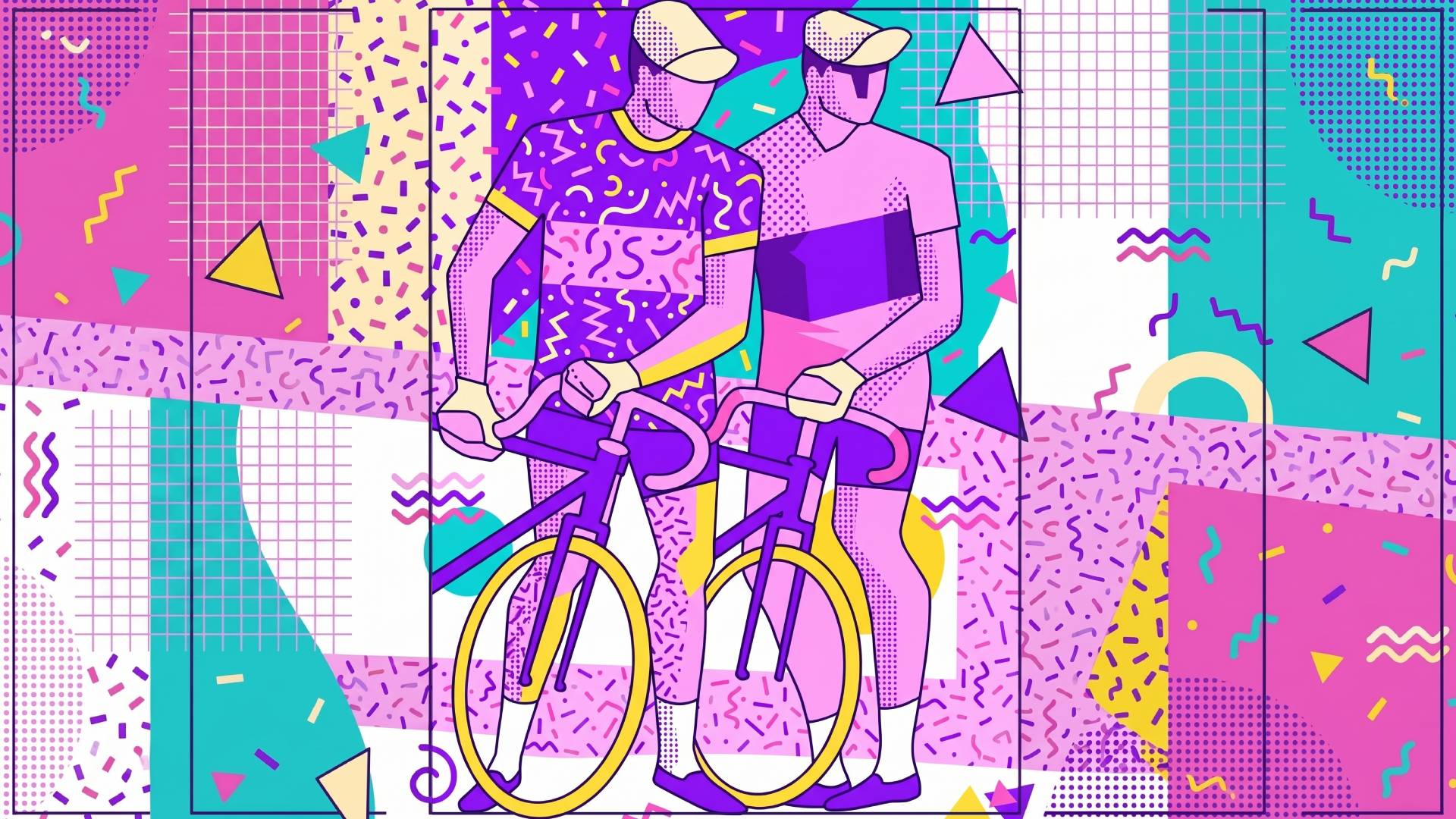

Striking the Sun – All Chapters
“Any time you need me, I’ll be there,” Liam had said.
That’s not really how it worked out, some, like, half his conscious life later, but I can’t blame him for that.
These days I’m here for Liam, or rather, I’m supposed to be. That’s not really how it worked out either.
It’s June 7, 2011, and outside the clouds loom low in the sky and threaten to storm. Indoors, the storm is already here, and I pack my bag to the sounds of doors slamming shut and footsteps dragging along the carpet in the corridor.
In the most expensive hotel in Annecy, chosen as our base of operations for these two days because it also has the most up to date sauna and massage facilities in the city, the Mashantucket Pequot cycling team has taken over the entire ground floor. Each hallway in this gaudy labyrinth is uniformly garish, every metre of floor covered by a mauve carpet splattered with a jarring gold geometric pattern, every off-white wall peppered with embedded LCD screens broadcasting a continual muted advertisement for the same hotel we’ve already paid for. I’m telling you this because right now I can see all of these features through my door’s peephole. I can also see Liam pacing outside my room, looking down at his phone screen. Anticipating a knock on my door, I open it pre-emptively.
“Are you doing alright, Dom?” Liam says.
I kick one of Tex’s new trainers out of the middle of the floor.
“Just a bad day.”
“I have to go give an interview now, but after dinner we need to have a talk,” he says. “Is that okay?”
He walks into the room all the way to the window and glances out over the car park and fire exit. Perhaps he’s checking if you really can see the side entrance to the building from here, because he doesn’t believe— ah, but that’s something we’ll get to later.
“Yeah, we need to have a talk,” he says. “What time’s your flight?”
December 2010, Cahiers du Cyclisme
Liam Greene is the greatest cyclist Britain has ever produced, and he’s about to produce Britain’s greatest ever cycling team.
The British have a confused relationship with Greene; a lack of patriotism is the greatest sin, my friends. For the British, nationalism is the most desirable quality in an athlete. Better to be a failure who calls on a deity to rescue a queen than a winner who lives abroad and refuses to race for the British national team. Lately his press team have been trying to challenge this perception, to paint him as an all-English hero, but many still view him with suspicion.
Perhaps the nation, the team, and the man, would then object to my associating Greene so closely with Britain, but few would dispute the ‘Great.’ There’s no pretending the new Mashantucket Pequot team in 2011 will be the brainchild of supposed mastermind Hudson Ivory. Liam Greene alone built this team: it is Greene who found the wealthy anonymous funder, Greene who brought in the staff (including, yes, team manager Ivory), and Greene who signed up most of his allies from the peloton.
On paper it’s a squad that lacks depth, especially in the Classics, but that’s not what this team is about. This is one of those most unique and exciting endeavours in sporting narratives; a team built by one man around a common purpose, with one singular goal: guiding Liam Greene to Britain’s first Tour de France victory. Because surely the British will warm back to him, friends, when that maillot jaune is on his shoulders, this British athlete triumphant atop the podium of the world’s most glorious sporting event.
Henri Giroud
January 2011, Cahiers du Cyclisme, Letters to the Editor
Sir,
Is Henri Giroud’s madness contagious? His first just about coherent article for your magazine in months should be a cause for celebration, but his love letter to the new team of the umpteenth rosbif he’s declared his favourite rider had exactly nothing to do with the question he was asked. Did you publish it in the wrong place? Have you simply given up trying to edit his ramblings? How else could that diatribe have been Giroud’s pick for the Best Performance of 2010? It is obvious now that your magazine is explicitly trying to alienate and upset its readers. I have cancelled my subscription and will advise friends to do the same.
Roger Singe
Dinner is the mess I expected. We sit in silence, the whole team uniformed in matching azure shellsuits looking like a malnourished boyband. All bar me, clad in the livery of collapse, my old jeans and a faded black t-shirt. Nobody seems able to resolve conversation and nobody will meet my eye.
Liam presides mute over the table, watchful at its head, Lorenzo Arcuri deferential by his side as a cub to a sea-lion. The silence he’s brought burns a ring around the diners, and not a single person dares profane this moment with the slightest observation.
Our waiter treads softly and sets the first plate down in front of Liam. After that, the plates spread quickly, the circle of saturnine faces pointing down first at the tablecloth and then at the mounds of pasta before them.
Our team leader’s body has been worn to the deepest recesses of exhaustion today by some of the most punishing mountains in Europe, but he resists eating. Not by beef or by bread are giants made or nourished. He lifts his chin and watches over the table for each of us to receive our food.
An arm reaches around and softly places the meal in front of me. The person it’s attached to is already walking away by the time I turn around.
“Hey. Excuse me,” I say. Everybody raises their heads. Even the waiter appears shocked by my intervention. “I’d like a bottle of red wine with my linguini.”
She meets the eyes of Hudson and understands the situation without breaking the abominable hush. I look over at Hudson too.
“I thought you’d be pleased to see me finally bringing something to the table.”
His face turns red and his fists clench and he leans forward in his seat toward me, but Liam clears his throat and Hudson backs down, looking no less outraged. Even if a cyclist drops out of a race, he’s expected to dine the same as his teammates for the sake of cohesion. For the professional cyclist who practises dietary temperance eleven and a half months of the year, it can be hard to watch friends enjoying wine and eating food that doesn’t contain pasta or sugary go-faster slime.
There are no jovial spirits at the table. Last night seems an eternity ago. Tonight’s ambience is the clinking of forks on the bottom of dishes instead of the clinking of champagne flutes, and the low rumble of smalltalk in place of cheers.
I push the plate forward out of my way. I can’t bring myself to eat. Instead I drink prodigiously and without restriction. The first glass goes down like water, and I step up from my seat.
“A toast,” I say, the words leaving my mouth before I can veto them, my brain hearing them for the first time with the rest of the diners. “A toast to Bernard Larcque.”
One half of the table stares at me agape, the other looks at Liam Greene. A couple of riders raise their glasses instinctively, before lowering their arms and averting their gaze to the tablecloth.
Liam meets my eye and raises his glass.
“We have witnessed the birth of a new French cycling sensation,” I say.
Liam now makes what’s intended to be a warm smile, wide, with his teeth bared. I’ve known him long enough to know when he’s being insincere, but this particular social cue would be obvious even to the Liam Greene layman.
Hudson Ivory, our near-permanently absent general manager, stands up.
“Dominic, your taxi will arrive soon. Perhaps you should return to your room and gather your possessions.”
He places the bottle and the glass in each of my hands and tells me to take them away. When I leave the table, Tex gives me a pat on the side, but he doesn’t raise his eyes to make contact.
Susan bought the flights on the company account right there and then. She was grateful to Jonah for signing the trip off without having to go through the usual convolutions.
Arrive Thursday 7th July. Leave Friday 8th July. Now it was booked, she began to think about it as an article, a fragmented dialectic that had to be structured and translated into language. It stopped being a fantasy, somewhere in there, and a nervousness fluttered in her stomach, like the favour she’d asked for had been so huge, and now she wasn’t certain it would pay off.
The open neck of an empty wine bottle protruded from the bin underneath her desk. Who knows how long it had been there while she’d been absent. The smell rose, a stale vinegar clawing its way into the back of her throat and causing her to retch. She bagged the bottle up and carried it out to the waste bins in the building’s lobby.
She didn’t expect it to be like this when she moved to London from Bristol. This new life so lonely and boring, lost in a city like any other but one tired and selfish and packed to the gills with the children of privilege. London was a good city to be anonymous in, a drunk Jonah had told Susan during her first week at the Globe, but he hadn’t understood not everybody who’s anonymous wants to be.
Between the hotel’s restaurant and my room, I misplace my wine glass. I’m not really feeling myself.
Hudson’s intention was to make me leave the table, but it’s later than I thought and my cab will be here in twenty minutes. My head’s numb with exhaustion and I want to take a nap.
The hotel’s windows stop opening a few centimeters short of where I want them, but I’m relieved to find the gap’s just wide enough for a light, damp breeze to blow in, causing my skin to twitch and form goose bumps. Sunburn itches at my thighs through my jeans, one more lingering pain from this afternoon.
This the life I thought I wanted. Now I feel trapped in it. Those weekends lost to my bicycle, the school classes I missed to get that extra training in, it’s all time I could have spent learning a trade, taking on a job outside of the spotlights, where my actions wouldn’t affect so many people.
There’s no love like love lost. As converts to religion embrace their new lives with such zeal, so my dislike for this sport has grown more encompassing than the primitive, senseless bile we get from the Road Tax brigade who’ve never first opened their hearts enough to truly love it. My distaste is more nuanced than any of that, born of a level of knowledge few people are ever fortunate enough to attain. I despise every part of it inside out, from the insular community of riders, through the incestuous schmoozing of the businesses, through the fans who’ll turn on you in a second and expect the world for nothing. Maybe that’s the only way to hate something truly, to love it with all your heart first. I don’t know; even for the loathing I’ve felt, I can’t imagine being able to quit. Not even after this.
I have to endure fifteen more minutes before the taxi arrives. My bike’s already in its case, but if I take five minutes getting downstairs to pick it up, that gives Liam just a ten minute window to get here and say his piece. I bet he’s finishing his dinner now. Perhaps Hudson Ivory has given the team a pep talk, rallying the troops at their lowest point. And then Liam asks Hudson what time my cab is and doesn’t even need to so much as glance at his watch, just saunters casually up the hallway, lifts his hand and—
There’s a knock at the door.
“I know you’re in a hurry, mate, but we need to have a quick chat.”
This face is so familiar, but sometimes I barely recognise it.
I was fifteen years old when I first met Liam Greene.
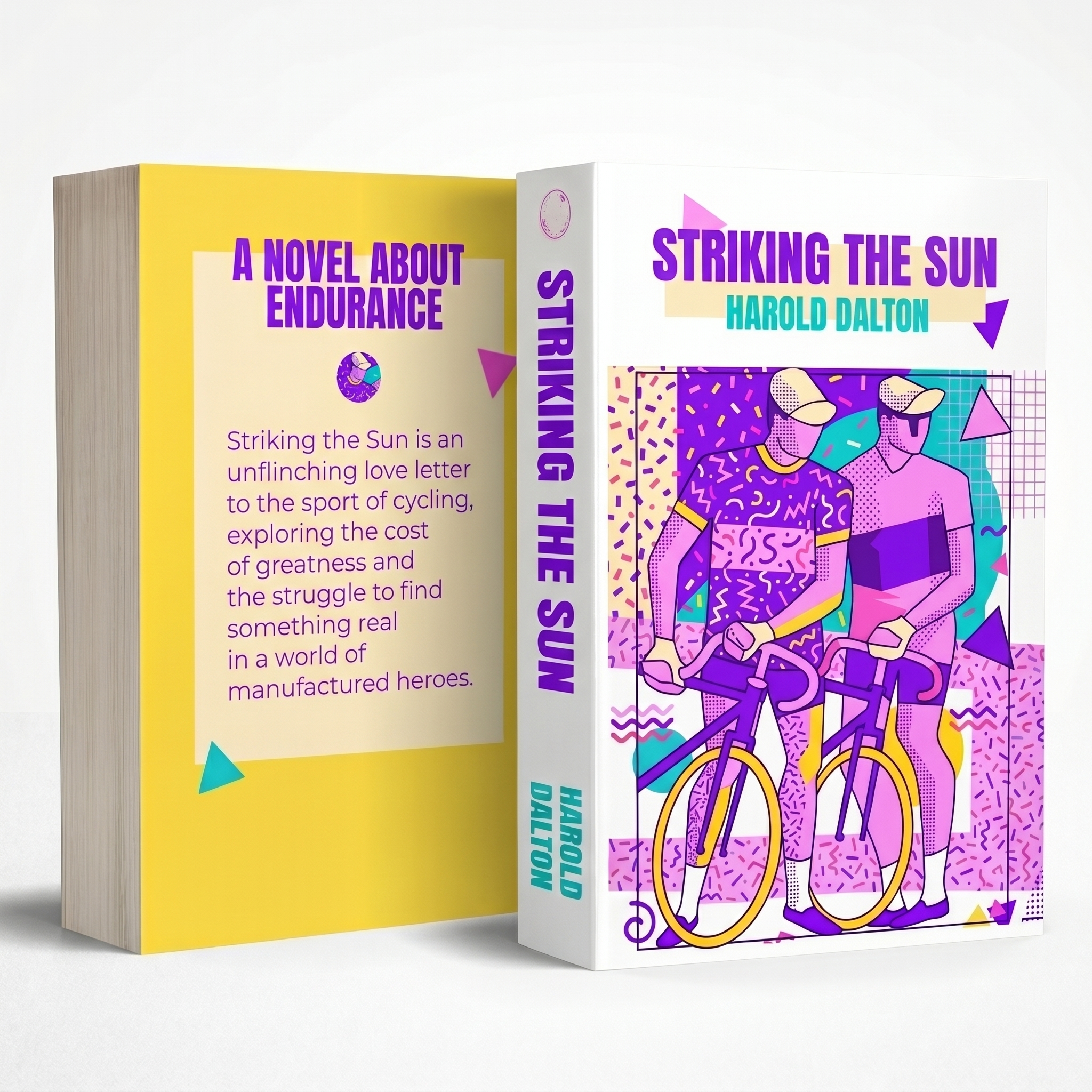
Hold it in your hands
The complete serialized novel is also available in a limited physical print run.
VIEW THE PAPERBACK →