


Striking the Sun – All Chapters
Uploaded 1 week ago
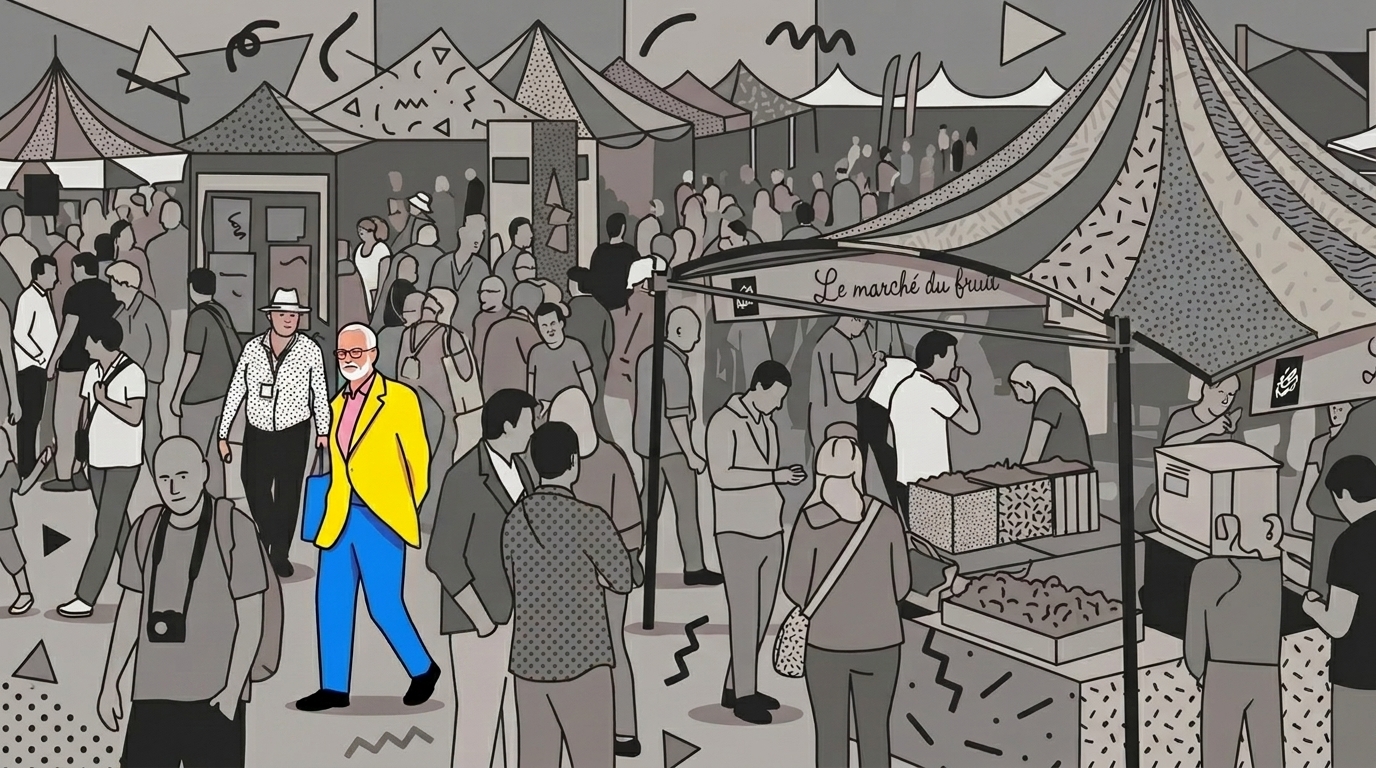
The video starts with a crowd. Today this small French town center has an unusually large footfall, and a surfeit of spandex. In the top left, the words CINECAP TRIAL VERSION obstruct the barriers and banners in the background. In the top right, a TV4 logo, signifying this was some part of a live broadcast, a moment in an ambient shot that somebody found entertaining. On this part of the internet, that could mean anywhere on the scale between comedy and tragedy.
The title is Forever Alone Bike Race Man. Where is the man? What is he doing? From this distance and at this resolution, it’s hard to make out anybody in the crowd. Wait, in the yellow blazer, he just, what did he do? His shoulders sink, and the clip cuts to a helicopter shot.
In case you missed it, here it is again with digital zoom applied. No clearer a picture, but you can’t miss the man now, reaching out for handshakes and being ignored, riders and journalists alike avoiding his eyeline. A series of blanks as he becomes more desperate for attention, and finally shrugs his shoulders and then the shape becomes difficult to make out, a sad, melting mass of yellow color.
And now, the opportunity to watch related videos. Play Bike Race Man Off, Keyboard Cat. And other jokes that will one day make as much sense to your grandchildren as the teenage fads of the 1900s do to you.
The comments are an aggregation of unrelated arguments and repeated memes using peculiar grammar. References to popular culture that will one day be tame and alien to young people, a reminder for you as a geriatric, many years from now, that you were never better than the youth, you were just a part of it briefly, and felt like that was the smartest thing in the world.
On page two,
“Il se ressemble à Henri Giroud, le commentateur de cyclisme pour TV4. Je vois la raison pour laquelle ils veulent l’eviter.”
And in reply,
“speak english this is an american sight”
with 7 thumbs up.
There have been 14,784 views so far.
It was nothing. A small team with no riders over 23, sponsored by a company that made diarrhea medicine, but for Liam and me, LaxRelief was one more step, a huge leap, toward our career goals. We both dreamed of escaping Britain and racing at the highest level, and this was our route. For some of the others, this was the career goal in itself. They were perceptive enough to understand they lacked the talent and the mindset and the drive it would take to make the next step up, and they were already working to maximize their earning potential.
The contract arrived by second class mail, along with a letter full of grammatical errors, which assured me the £8,000 a year was a good deal, and would be supplemented by the process of development I’d undergo at the team, the opportunity to race for Great Britain, and access to shared accommodation in Belgium that meant I could race on the continent. It was less money than I’d hoped for, but it would just about pay for my phone contract and food.
“I just don’t think it’s a good contract, love,” my mum said. “Can’t you call your granddad and have him look it over?”
“I earn less now so in the future I’ll earn more.”
“You know that do you? Are lots of their cyclists getting to ride the Tour de France?”
“No, but they’re specialists in training young riders to achieve their full potential,” I said. “And they’ve merged with a European team so there’s going to be more opportunities.”
“More riders to develop, more like. Sign the contract if you want, but I’m not bankrolling you.”
I did. Liam came over and we signed our contracts together and became LaxRelief riders.
We were riding for free before, recall, going cap-in-hand for equipment. Now we were earning money and had infrastructure backing us up, so by comparison this felt stable. Besides, what would we spend our money on when we didn’t drink, didn’t dine out, and did our best not to pay any rent to our mums?
One of the two fast German cars parked in team owner Nick Lyon’s vast driveway displayed the LaxRelief logo in its back window. My mum tutted when we pulled up outside his country house in her car, and then without even a goodbye she accelerated back out before the gate closed, leaving me stood on the path to his front door.
This would be the first time the team would meet. I rang the doorbell but nothing seemed to make a sound, so I waited for a moment and pressed it again just as the door opened. A stranger confronted me, tall, with a square head and a buzzcut, dressed in a blue and white tracksuit. He held on to the door, and looked down at me.
“You’re impatient. I’m Ton,” he said.
“Hi.”
“Are you going to tell me your name?”
I told him, and he shepherded me through to Lyon’s living room. The whole team was already waiting, piled onto two chocolate couches. Liam was sat between two boys who were talking in thick Scouse accents and looking at him for approval. Nick Lyon stood in front of his enormous television talking on his phone, and when I sat on the armrest of one of the couches, he interrupted his call.
“Dominic, sit on the floor, you imbecile. Why would you sit on the arm of my new sofa? Didn’t your father teach you any manners?”
I shuffled forward and sat cross-legged on the edge of the rug in front of my new colleagues. Liam kicked me in the back, then smiled at me and mouthed the word “Wanker.” I didn’t know if he mean me or Lyon.
Ton reclined in Lyon’s armchair. Lyon finished his call, looked over at Ton as though he was about to say something, and then thought better of it and began to pace back and forth in front of me on his cream rug.
“I’m sure you all recognize Ton Verstraaten, sat there in my, ah, sat right there. He’s had a long and distinguished pro career, and I haven’t checked, but I’d wager no other team in Britain can boast such a successful coach,” Lyon said. Slumped in the chair like he was sinking, arms both up on the armrests, Ton nodded his head. “This will be his second year with the team. He’s already proven himself hugely competent, but I’d like to remind you he’s as new to his role as most of you are to yours, so be understanding of each other.”
“This is very important. All teams are built on respect. Just because I’m having to tell you what to do, men, it doesn’t mean I don’t consider you equals.”
“Thank you, Ton. Something to remember there. Here’s something else to remember: you’ve made the right choice. We’re the best youth development squad in Britain. We’re the only team in Britain with a relationship with the Royal Society. Only we can promise that if we think you’re good enough, you will get to race for Great Britain. We have faster team cars than any other British team.”
I zoned out. Ton’s body language as he nodded along to Lyon’s speech amused me. He seemed useless and humble, not concerned with his appearance, unlike Lyon, who was by now promising us the world.
Lyon had moved onto a rigorous checklist of what we’d need to do in the remaining two months before racing started. Ton chimed up.
“Don’t forget we have to repair the tire on the car. We’ve been riding too long on the spare.”
“Yes, of course,” Nick said. He looked sheepish, the bravado sucked out of him for a moment. “Let’s get a quotation for that.”
Ton’s intervention was reassuring. It had been a political move to embarrass Lyon in front of us during his bravado, and suggested to me he was willing to do what was necessary to get things done, however publicly. An ex-pro who’d been that good would rarely settle for being subservient.
But if Ton’s words hadn’t made the team’s evident problems clear, then the next thing Nick said should have put the fear in me like it seemed to in Liam.
“Now, I have some bad news. We promised you a training camp this year, but unfortunately it won’t happen. As you know, the Royal Society for Cycling provides us with a lot of our funding, but most of that is going on your wages and operational costs. We can’t afford to send you to a camp unless the RSC increases our funding. That’s the crux of it. Ton and I are very sorry.”
“What about the apartments you told us about?” One of the Scouse boys sat with Liam said.
“Yes,” said Nick Lyon. He put his hands in his pockets and looked over at the clock on his mantelpiece. “I’ll find out about that and let you know.”
“What’s your name?” Ton said.
“Stephen.”
“You told me when you entered. Your last name, please.”
“McLoughlin,” he said, looking down at his hands.
“I recognized you. Your father was a good rider,” Ton said. Stephen nodded, and the boy to the other side of Liam leaned over to punch him in the arm.
Lyon resumed his speech. Once or twice, someone from the squad asked him a question that put him on the spot. To hear this man with his big house and fast cars um and ah about the tiniest expenditure was galling, and not what I’d expected when I’d agreed to the contract. We kind of appreciated the penny pinching, I think, since we were living it ourselves, but some of us would later find out other teams weren’t run like this and the figures didn’t quite add up.
Even at the charity team they’d found budget to send us away for training, just to Cardiganshire in Wales, but it was a training camp nonetheless. Lyon had sent us back home with little more than a reminder to train and a promise he’d be in touch with our individual racing schedules.
Stephen McLoughlin and the other boy, John Clarke, had taken a shine to Liam. By extension, they’d taken a shine to me, with Clarkey sending me indecipherable text messages all hours of the day.
When I answered my front door and saw them on my doorstep, I probably should’ve been less surprised than I was. Liam was pacing behind them.
“It’s a pipe dream, isn’t it?” He said into his phone.
“Nick Lyon,” Clarkey said.
“He’s a prick,” Liam said, no longer holding his phone.
“We don’t need Flanders,” Stephen said. “Look at this countryside you’ve got.”
“What’s in Belgium anyway? You can stick your Yorkshire puddings up your arse, but this is as good as Nicholas’s shitty flats any day.”
“He promised. Why make promises you’re not going to deliver on? He tricked us,” Liam said.
“Get your bike, Dom,” Stephen said. “Training camp starts today.”
Stephen came from Port Sunlight, and Clarkey was from somewhere called Bootle.
Clarkey was difficult. I liked him, but he spoke with a ferocious intensity and wanted to be the loudest, funniest voice. He was a real character; boisterous and sometimes exhausting. I could tell even then he wasn’t cut out for the life of temperance that awaited us all. The North Yorkshire Moors were ripping his legs off, but any distance we’d put between us he’d make up on the descents, throwing himself down the hills like he wanted to die, with his chin almost touching his front tire.
Stephen was more special. He’d won more races than any of us last year because of his gritted perseverance and his confident, tactical mind, no-doubt drilled into him from an early age. They’d been small races, and the team signed him to hedge its bets in case he displayed the same kind of aptitude in higher ranked races this year. Until I joined the team I’d never met him, but I knew his dad, who’d had nothing but unkind words for his son.
When we got back to my house, they unrolled their sleeping bags in the living room floor.
“You know you never told me about this?” I said.
“We discussed it with Liam when he was in Liverpool.”
Liam had been quiet on the ride, and now he looked sheepish.
“I should head home, mate,” he said, and slipped away while John Clarke cracked a joke.
On our ride the next day, Clarkey slapped me hard on the back.
“Your ma made me a coffee this morning.”
“That’s nice,” I said, but I couldn’t imagine her being as pleased as Clarkey thought she was.
Liam wasn’t pleased either. He rode with us alternating between skulking at the back of our group and taking ferocious turns at the front that did more harm than good. He didn’t even come back to my house after the ride.
I stayed up late with Clarkey and Stephen, and after I went upstairs to bed I heard them shouting and laughing all through the night.
The next morning, my mum woke me to tell me they needed to leave that day. After the ride, Stephen packed everything into Clarkey’s car and thanked me.
I didn’t really see Liam after they left for the North-West. I assumed he was losing interest after the disappointment of our first couple of weeks as professional cyclists. I imagined he was spending his time with Amy.
For want of a group to ride with, I began to train with Sedgethorpe Road Club again. By the time my first race rolled around, my club mates in Sedgethorpe still hadn’t finished ribbing me about the fact I was riding with them instead of my so-called pro team.
It wasn’t like she didn’t want to stay for the Q&A; she genuinely did out of morbid curiosity. It was all just too slow. Changeovers between films were agonizingly long, so long they defied sense, and the only thing worse than sitting for twenty minutes alone while everybody else in the room chatted was the prospect of these people inviting her to participate in their conversations.
She looked at her watch and closed her notebook. She had to get across town and the last Piccadilly Line train would leave in an hour. When she stood, somebody tapped her on the back.
“You should stay for the next film,” the man said. He had a kindly old face, and a soft voice. “It’s a good one.”
“I think they’re probably still editing it back there,” she said, but he didn’t crack a smile. Other faces were looking at her now too and she felt a warmth running to her cheeks.
“Are you the woman from the Globe?”
“No,” she said, and left.
The lights were still on in the off-licence on the corner of her street, and even though the owner was sweeping the floor, he nodded at her and unlocked the door to let her in. With most of the fluorescent lighting switched off, the lava lamp cast a disconcerting structure of lights across the bottles, twisting and moving in seamless fragments, looping back across the rows of cider in the refrigerator. Trails from extinguished incense sticks stung Susan’s eyes.
The evening had ended without letting the first auteur provide any insight into why he had let repetitive motifs constrict his narrative or why his understanding of the futility of adulthood should be considered any more developed than those of the people actually living through it, but had instead culminated in drinking seven cans of cheap lager in bed and listening to all the songs she hadn’t heard since she was a teenager, falling asleep with her laptop on her chest.
She slept through her alarm and made a meek but surprisingly fast and peaceful bus ride to the Globe’s office in Hammersmith. When she opened the office door, Nathan and Jonah were sat with their backs to her in Jonah’s office, Jonah taking a call and Nathan looking down at something. Her phone beeped in her bag and she stepped swiftly and quietly to her desk before looking at the message.
I don’t recall you telling me that you were going to be absent today. You have to tell me.
It was from Nathan. She turned her computer on and had just enough time to open a document before he walked into the room and took a second glance with a momentary glimpse of horror on his face.
“I didn’t know you were in,” he said. A man horrified not from guilt but at being publicly and visibly wrong. “I just sent you a message.”
“Yes,” Susan said, “I saw.”
“Can you have the short films piece on my desk this afternoon?”
“I think so.”
“How many users did the website have yesterday?”
“I’ll have to look.”
He walked without saying anything, cup in hand, over to the kettle.
Hold it in your hands
The complete serialized novel is also available in a limited physical print run.
VIEW THE PAPERBACK →