

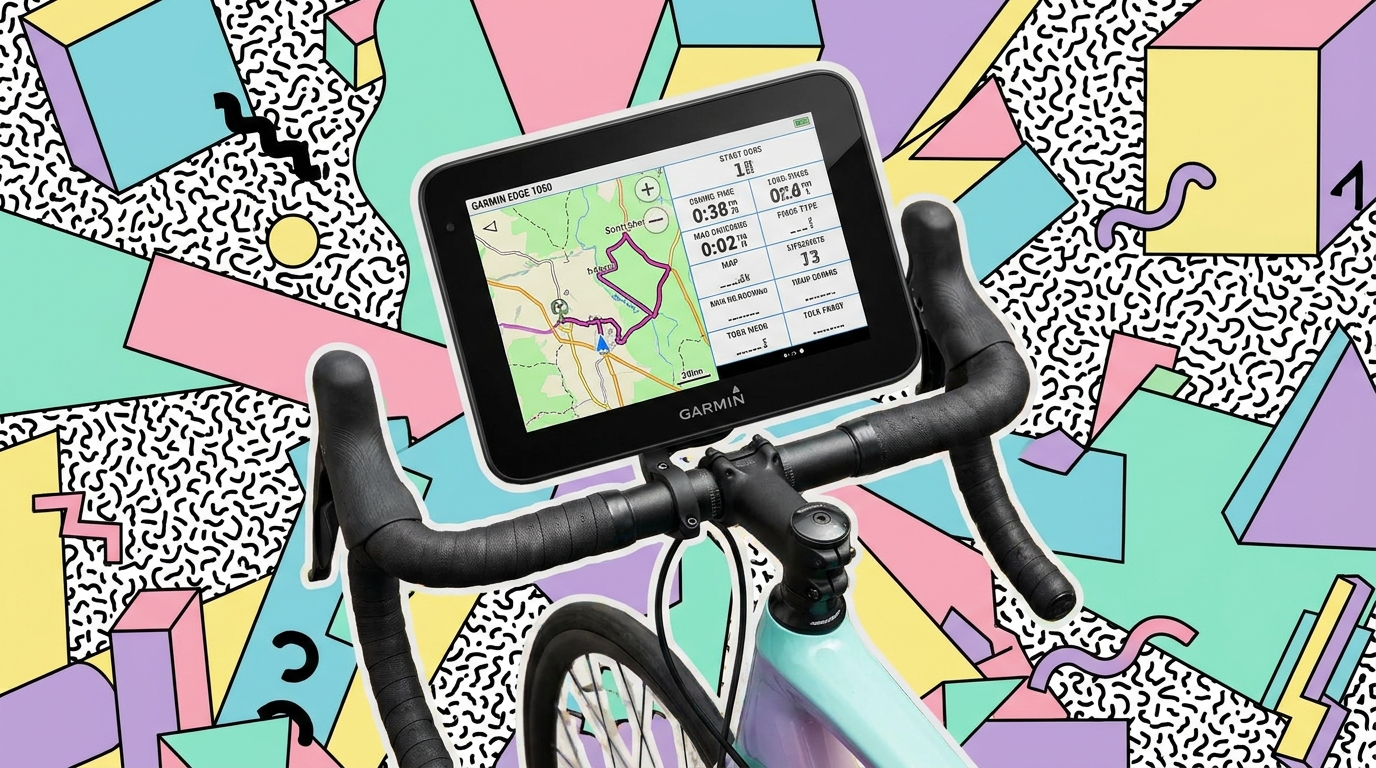

The UCI Management Committee has emerged from its lakeside meeting in Desenzano del Garda, Italy, with a fresh batch of regulatory decrees. In a familiar case of the UCI deciding to take care of the most absolutely important things affecting the sport right now, we have some new rules about sports nutrition placement and large bike computers.
Starting as early as next month, the sport will see a rollout of rules extending from immediate wardrobe restrictions to major structural changes to the WorldTour calendar. Here is the breakdown of what is changing and why the governing body claims it matters.

Front-Mounted Jersey Pockets: BANNED
- WHAT: Starting July 1, 2026, front-mounted jersey pockets are banned. Moving forward, the only pocket permitted on the front of a professional jersey will be a single, dedicated pouch explicitly designed to hold race radio equipment. All actual storage must return exclusively to the traditional three slots on the lower back.
- WHY: The UCI noticed that team performance directors were executing a clever loophole: stuffing internal front pockets with gel wrappers and energy bars to alter a rider’s chest profile and clean up aerodynamic airflow. The governing body claims these items were practically impossible to access or consume under race conditions anyway. Backed by aero studies, the UCI argues that these body-shape alterations create speed gains that compromise sporting fairness and lead to more severe high-speed crashes.
Our Verdict – Access to a gel on the front of a jersey is a performance benefit. Using that space solely because it provides an aero boost is also a performance benefit. Using that space for race radios… is a performance benefit. Can’t see why the UCI possibly thinks it can decide what you’re allowed to put in a pocket.

Head Unit Device Size Cap
- WHAT: Beginning January 1, 2028, the UCI is introducing a maximum physical dimension limit for cycling computers. Head units will be strictly capped at a maximum footprint of 126mm by 71mm.
- WHY: While this structural cap won’t actually affect the primary market-leading head units currently on any out-front mounts in the pro peloton, the UCI wants to preemptively stop tech brands from turning cockpits into digital dashboards. The justification relies heavily on cognitive load studies. The UCI states that an increasing volume of live data delivery on larger screens increases a rider’s mental workload, which they have identified as a key contributing factor to commercial peloton accidents.
Our Verdict – Entirely stupid. But we also find the gigantic Hammerhead bricks stupid too. We’ll allow it.

2027 Grand Tour Calendar Shuffle
- WHAT: A massive scheduling shake-up has been locked in for the 2027 season. The Vuelta España Femenina is being uprooted from its traditional spring slot and shoved to the absolute tail end of the Women’s WorldTour calendar, running directly after the men’s Vuelta. To clear space, the men’s Vuelta will be contested entirely within the month of September. Additionally, the Lloyds Tour of Britain Women and Classic Lorient Agglomération will move earlier in the season, while the Tour de France Femmes avec Zwift will kick off one day earlier.
- WHY: The men’s calendar compression is a logistical necessity to accommodate the massive 2027 UCI Cycling World Championships in Haute-Savoie, France. Intriguingly, the governing body provided absolutely no explanation for why it decided to entirely reshape the women’s autumn schedule to mimic the men’s Grand Tour template.
Our Verdict – The women’s Vuelta, at least, always felt misplaced.
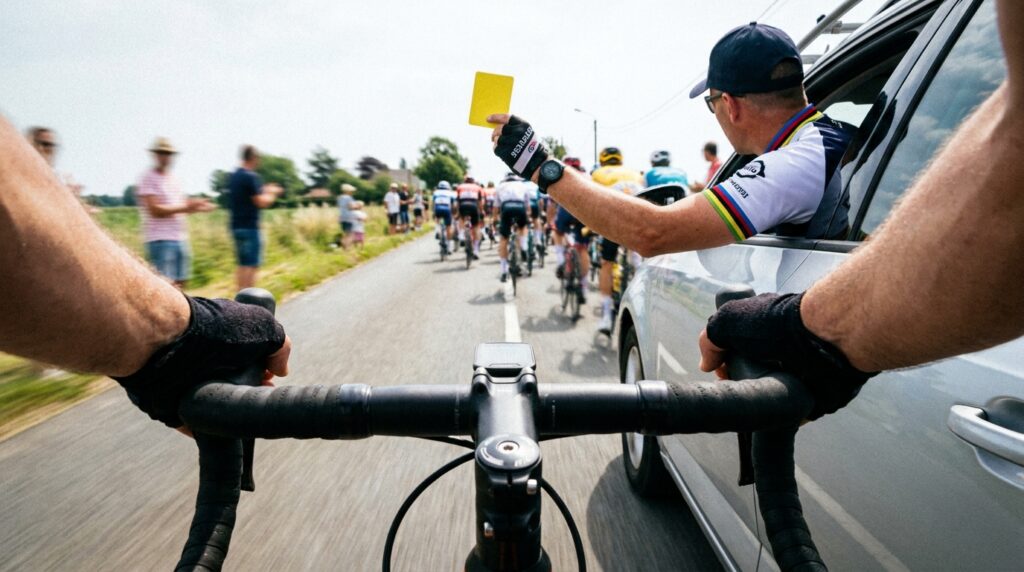
Yellow Cards and Hazard Graphics
- WHAT: The trial phase is officially over. The football-style disciplinary yellow card system—spearheaded by the SafeR safety group—is being expanded. Currently utilized at the WorldTour and ProSeries tiers, the system will extend to all Elite men’s and women’s Class 1 events starting in 2027. Commissaires will hand out cards for dangerous maneuvers, with automated bans kicking in for repeat offenders (e.g., a single-stage disqualification and a mandatory 7-day racing ban for accumulating two cards). Concurrently, race organizers will introduce a standardized system of hazard pictograms on road signs to visually flag incoming road narrowings, sharp corners, speed bumps, and train tracks.
- WHY: The UCI claims feedback from the professional peloton has been highly positive. The objective is to increase real-time accountability on the road, utilizing the threat of short-term suspensions to actively deter erratic, dangerous riding behavior before an accident occurs.
Our Verdict – We’ll support it if they make the commissaires ride in the peloton doling out cards, like in football. Otherwise, daft.